REREC’s Strategic Plan ( 2023–2027)
The Rural Electrification and Renewable Energy Corporation (REREC) Strategic Plan 2023–2027 sets out the Corporation’s roadmap for delivering universal access to sustainable, reliable, and affordable energy across Kenya. Anchored in the Energy Act, 2019, the Plan reinforces REREC’s dual mandate of expanding rural electrification and spearheading the development and adoption of renewable energy.
Guided by the vision of “a green energy driven nation,” the Plan aligns with national and global development priorities including Kenya Vision 2030, the Bottom-Up Economic Transformation Agenda (BETA), and the Sustainable Development Goals, particularly SDG 7 and SDG 13.
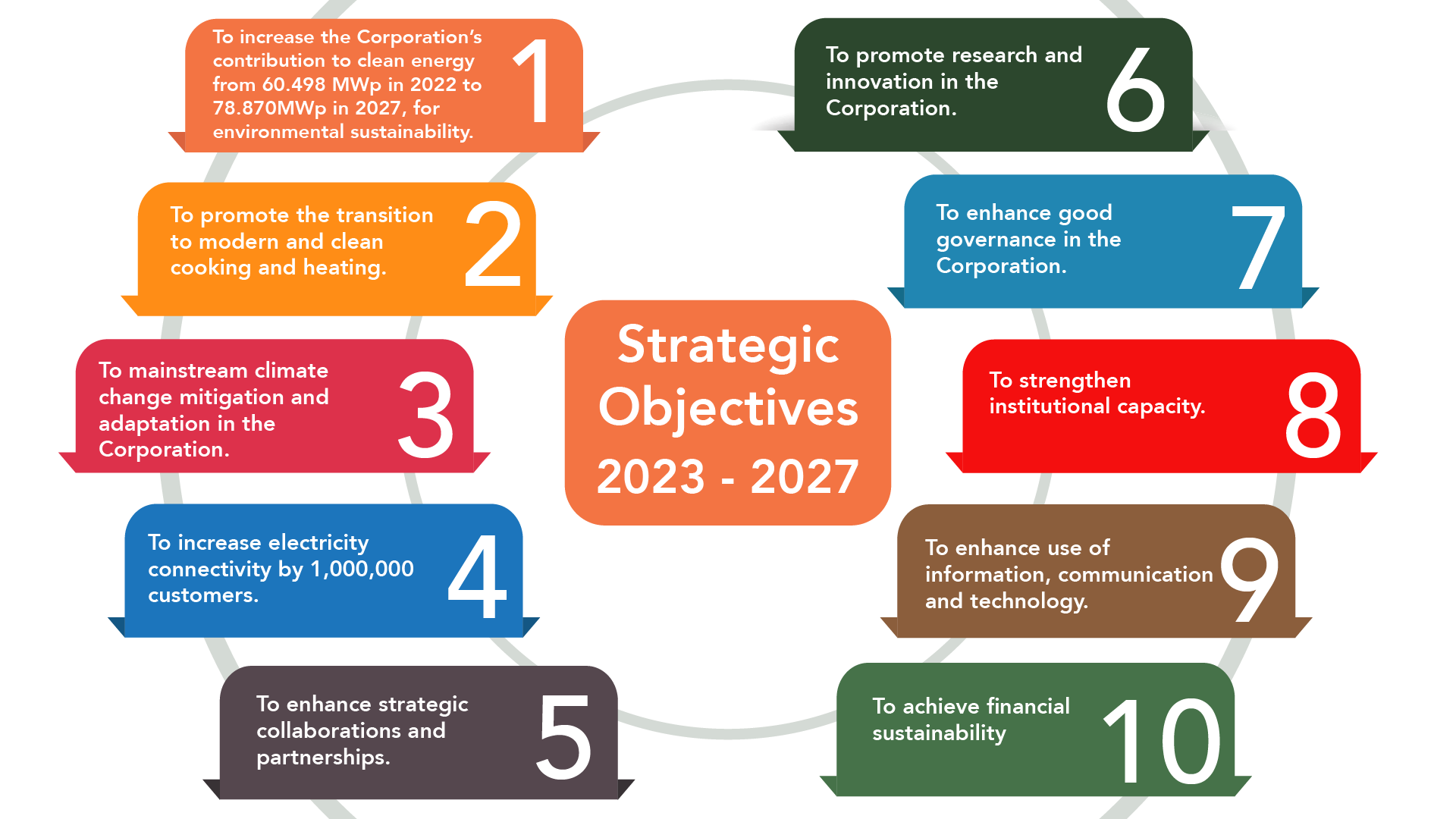
The Plan focuses on accelerating electricity connectivity, scaling up renewable energy solutions, promoting clean cooking technologies, and strengthening institutional capacity. It is implemented through six key result areas covering energy access, environmental sustainability, partnerships, governance, ICT, and financial sustainability.
Through this strategy, REREC aims to drive socio-economic transformation by enhancing access to energy in underserved areas, reducing greenhouse gas emissions, and supporting Kenya’s transition to a green and inclusive energy future.
Key Deliverables of the REREC's Strategic Plan (2023-2027)
Expanded Electricity Connectivity: Connection of approximately 1 million new customers to electricity through grid expansion, intensification, and last-mile connectivity initiatives.
Solarization of Public Utilities: Installation of solar photovoltaic systems in public institutions and solarization of boreholes in underserved counties to improve access to water and energy.
Environmental Sustainability Initiatives: Reduction of greenhouse gas emissions through renewable energy adoption, promotion of clean energy technologies, and environmental conservation initiatives such as tree seedling production.
Increased Renewable Energy Contribution: Addition of approximately 18.372 MWp of clean energy to the national grid through solar and other renewable energy projects.
Promotion of Clean Cooking Solutions: Scaling up adoption of modern and clean cooking technologies, including training of approximately 4,500 artisans and community outreach programmes to reduce reliance on biomass fuels.
Strategic Partnerships and Resource Mobilization: Strengthening collaborations with national and county governments, development partners, and the private sector to enhance financing, implementation, and sustainability of energy projects.
Development of Renewable Energy Infrastructure: Construction of solar mini-grids and deployment of standalone renewable energy solutions to electrify underserved and off-grid communities.
Capacity Building and Local Industry Development: Strengthening local capacity in renewable energy technologies through training, partnerships, and establishment of energy centres to support innovation and knowledge transfer.
Institutional Strengthening and Digital Transformation: Enhancement of governance, ICT systems, and operational efficiency to support effective service delivery and performance management.
Strategic Plan Documents
Access the current and previous Strategic Plan Documents.